Russia Strikes Ukrainian Energy Targets After Trump Announces Ceasefire Deal
Russian forces struck at least six energy targets across Ukraine on Monday, according to President Volodymyr Zelenskiy, hours after US President Donald Trump announced that both sides had agreed to an energy ceasefire. The Kremlin confirmed talks were ongoing but rejected a Ukrainian proposal for a full 60-day truce. At least three people were killed in Kharkiv and three more in Ivano-Frankivsk. The European Union approved its largest sanctions package against Russia since the 2022 invasion, adding 1,569 new entities to its restricted list.
- World
- Politics
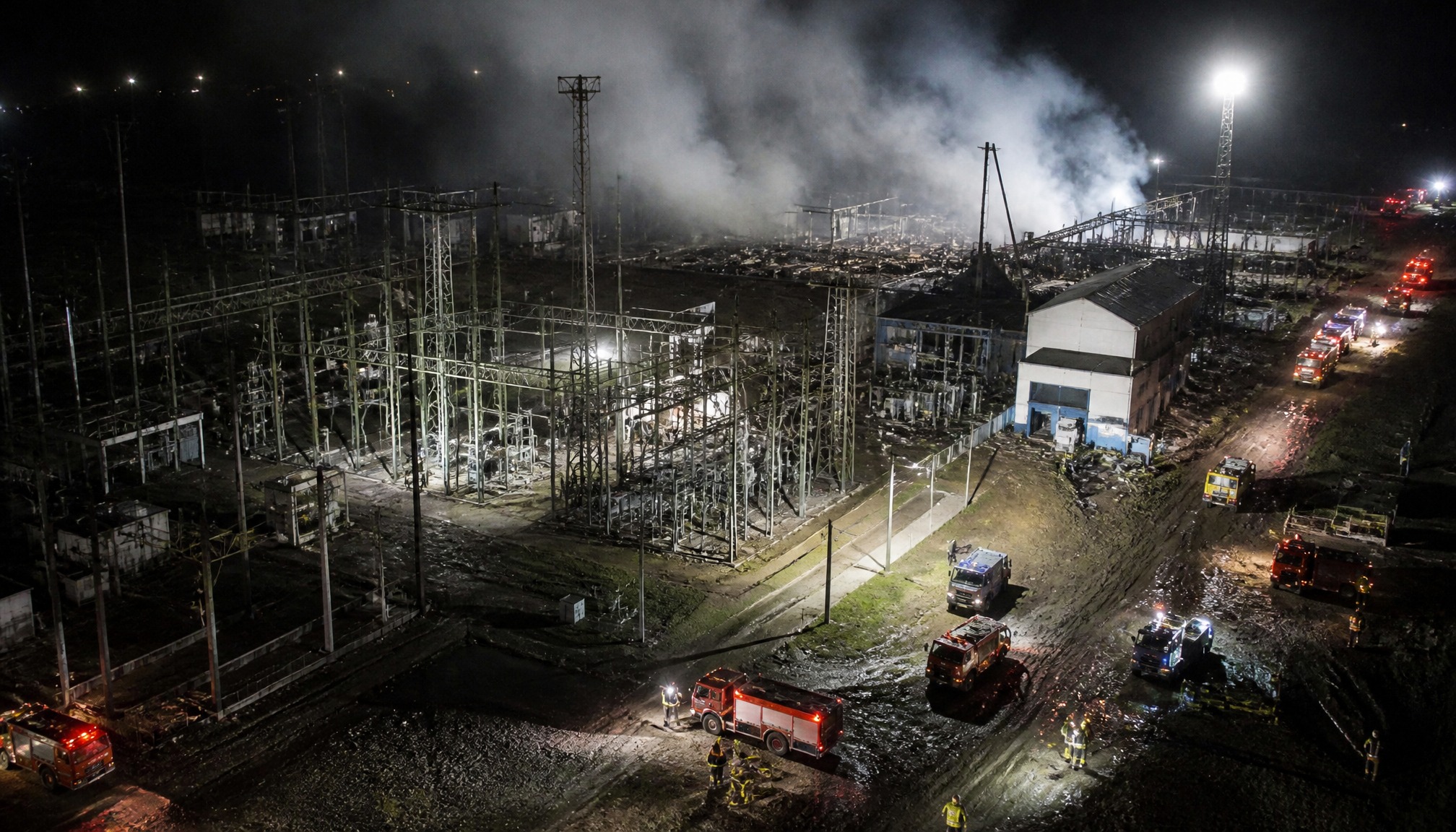

Volodymyr Zelenskiy reported on Monday that overnight strikes had hit a minimum of six energy infrastructure sites across Ukraine, and he contended that the pattern of attacks indicated Moscow had no intention of honouring the energy ceasefire that Donald Trump had put forward.
Trump announced over the weekend that Ukraine and Russia had reached an understanding not to strike each other's energy infrastructure — a claim that caught Kyiv and European allies off guard. The announcement came as Trump faced domestic pressure over elevated energy costs ahead of next month's midterm elections.
Within days of a deal to buy diesel from Russia taking shape, a separate arrangement labelled an energy ceasefire was announced — one Zelenskiy has openly contested, contending it moves away from the broader Western policy of sustaining economic pressure on Moscow. The announcement marked the second occasion in roughly as many weeks that a ceasefire between the two parties had been proclaimed from that side alone, without any corresponding acknowledgement from those engaged in the fighting.
Zelenskiy's hold on power came under scrutiny after Trump publicly called on Ukrainian voters to remove him via an election — an episode that reflected how far relations between the two leaders had cooled following Trump's return to the White House in 2025.
European allies responded on Monday by rejecting any proposed arrangement of that kind, declaring their support for Kyiv, and adopting a package of Russia-directed sanctions wider in scope than any introduced since the full-scale military campaign began in 2022. Foreign ministers from European Union member states approved an expanded roster of 1,569 individuals and entities subject to travel bans and asset freezes, a tally that represents the broadest single round of such restrictions the bloc has issued.
German Chancellor Friedrich Merz told reporters that Moscow would only enter into genuine negotiations when placed under sufficient pressure, and that this reasoning underpins the continued sanctions policy toward Russia.
Over recent months, Ukraine has directed long-range drone and missile strikes at Russian oil refineries and supply networks, operations that come after more than four years of aerial bombardment against Ukrainian population centres, including repeated efforts to disable heating and electricity infrastructure across consecutive winters. Trump has attributed the rise in global fuel costs — particularly diesel, which reached record prices in the United States after he launched his military offensive against Iran — in part to Ukrainian strikes on oil refineries inside Russia. Speaking on Saturday, he told Zelenskiy to halt attacks on Russian oil refineries.
According to one person briefed on the matter, the threat put on the table involved halting intelligence flows to Ukraine alongside an end to arms transfers — aid that had already stopped going directly from the United States to Kyiv, though European nations retained the ability to purchase such equipment through American channels on Ukraine's behalf.
Zelenskiy told reporters that no strikes on Russian oil refineries had taken place overnight on Ukraine's part, and that Kyiv would accept an energy ceasefire arrangement — provided Russia held to its terms. Elections that have been put on hold because of the war, he added, could take place in Ukraine on the condition that Moscow commits to a full 60-day ceasefire.
Zelenskiy's proposal for a 60-day ceasefire was set aside. Kremlin spokesman Dmitry Peskov stated that officials at multiple levels within the Kremlin, including President Vladimir Putin, had consistently maintained that a cessation of hostilities was not the goal — rather, the aim was a durable peace, toward which every available effort would be directed. Peskov indicated that additional details on the energy ceasefire negotiations would be made available at a later point.
In Kharkiv, Ukraine's second-largest city, emergency personnel worked through the debris of damaged structures following the overnight attacks. A woman identified as Minka recounted reaching a shelter only moments before a missile detonated in the vicinity. She told reporters that roughly ten minutes after assurances were given that energy infrastructure would not be targeted, what appeared to her to be a missile struck a power station close by; she also described witnessing a father moving frantically around the covered body of a child, weeping and calling out.
At least three people were killed in Kharkiv during the night of attacks, and further strikes on residential buildings the following morning left at least 22 more people with injuries, municipal officials confirmed. Three fatalities were also recorded in Ivano-Frankivsk, a city in the country's west, when it was struck on Sunday.
Targeting Ukraine's power grid for the third consecutive week, the attacks cut electricity to Kyiv for several hours daily, while water and sewage systems were also disrupted and the city's metro came to a halt on two separate occasions.